TTE, MSCED, TRD
Aluminum Extrusion Dies with a 90%+ First-Run-Rate
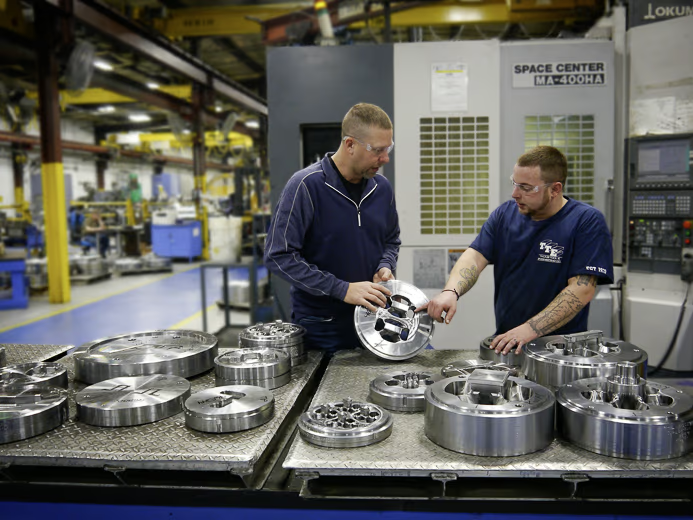
Our die makers have designed and built dies for more than 500,000 unique aluminum extrusion profiles. We know the failure modes and how to design around them, and more than 90% of our dies run successfully on the first trial.
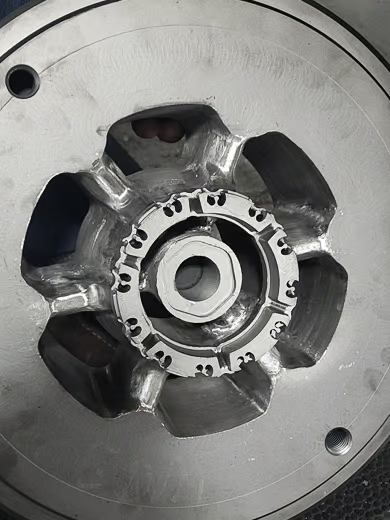
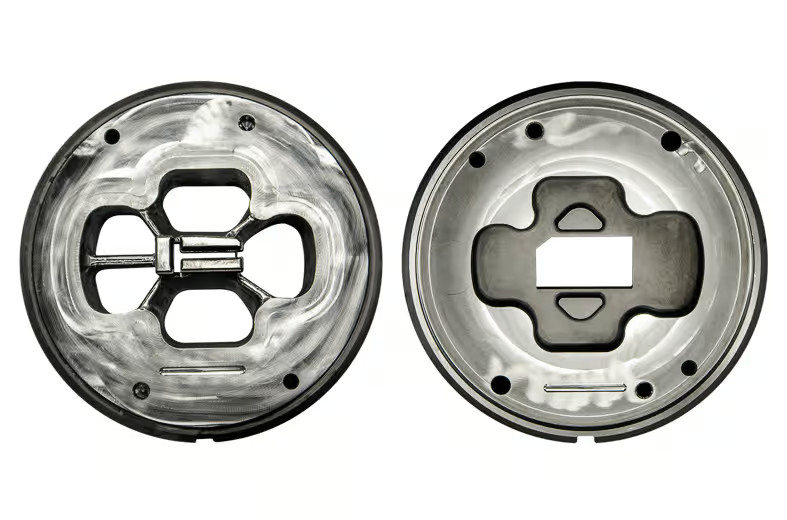
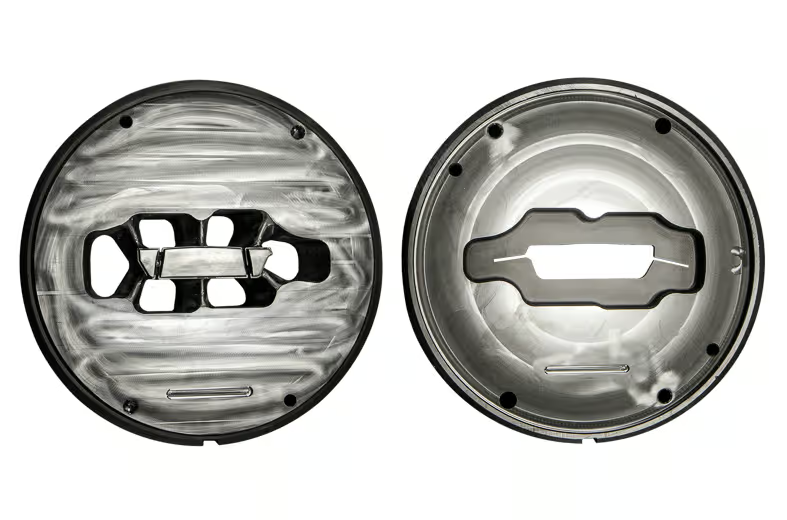
Solid & Hollow Dies, 4"-43"
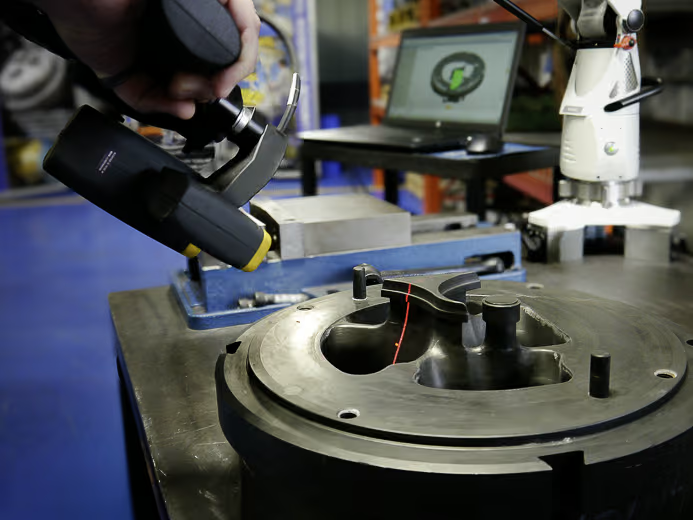
Every die we produce is designed around the profile, the alloy, the press it’s running in, and how you run it. We know the failure modes your profile is likely to cause and correct for them before the steel is cut.


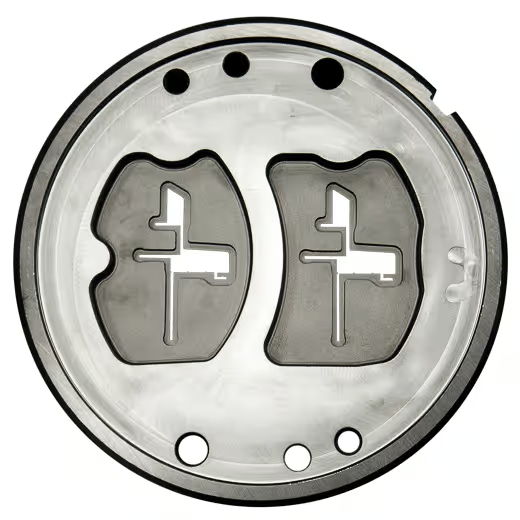
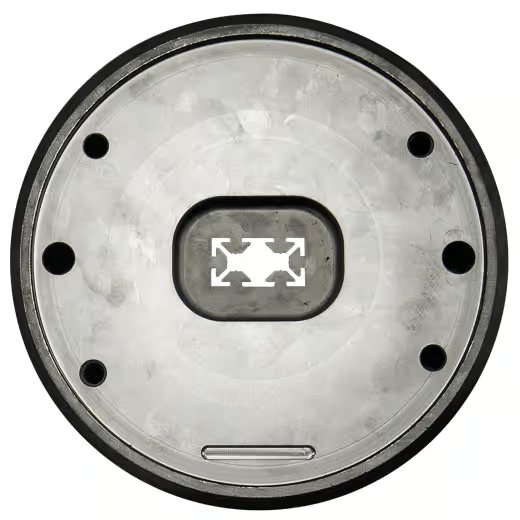
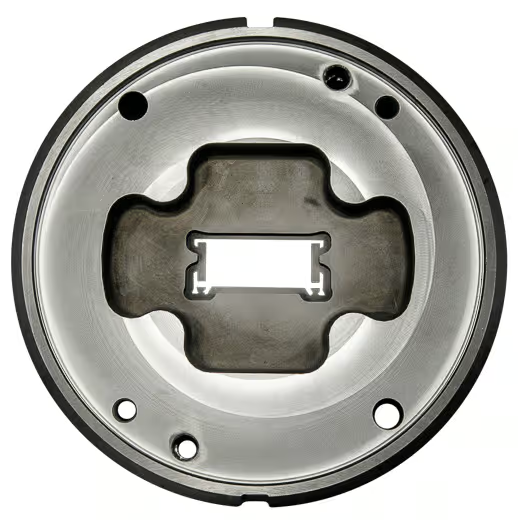
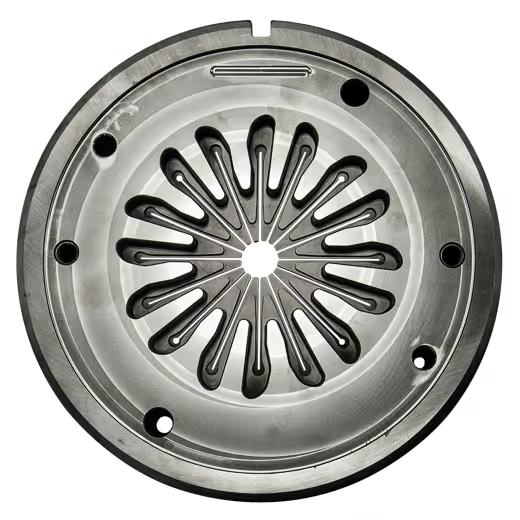
Die Types We Build
Solid dies
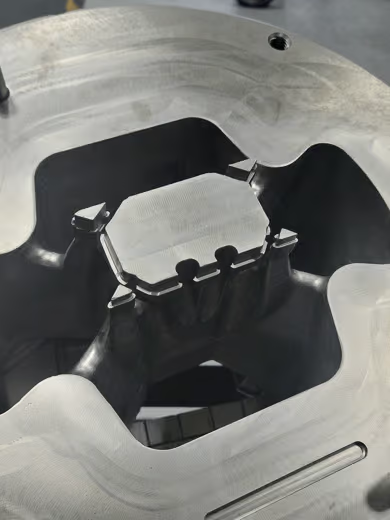
Hollow dies
Bridge dies
Spider dies
Drill port dies
Seal-Off dies
If your profile doesn’t fit any of these, send it to us anyway. Odds are we’ve seen something similar.
Why Dies Fail a First Trial, and How We Design Around It
A press waiting on die rework costs the average extruder about $2,500 an hour by our calculations, or $60,000 a day. Most failed first trials trace back to unbalanced flow or die deflection, both of which can be corrected in the design before steel is cut. Here’s how we do that.
Balanced Flow
Unbalanced flow causes most bad first trials. It shows up as bow and twist. We tune bearing length section by section so the whole profile exits at one speed.
Deflection control
Caving or dishing under billet pressure lets the bearing lose its edge. We size the backer and bolster to your press tonnage, not just your press diameter.
One design standard
Every engineer at every location follows the same documented design standards, so your die doesn’t depend on who was at the desk that day.
Final design review
Each design is checked to confirm it will work in your press with your specified alloy.
Repeatable geometry
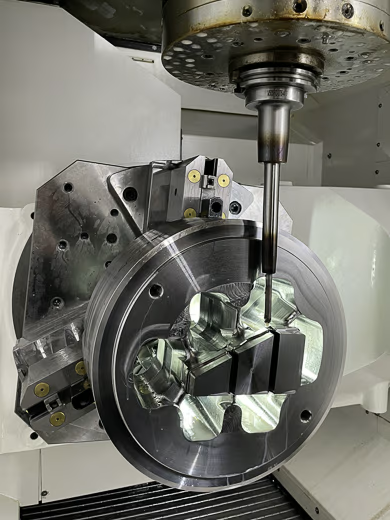
Our CAD/CAM systems run networked into CNC, so a die you reorder six months from now is cut to the same geometry.
Flow simulation
When a profile is complex enough to warrant it, we simulate the die with your alloy and press operating parameters to find flow problems before the steel is cut.
That’s what’s behind the 90%+ number.
In-House Heat Treat and Nitriding for Longer Die Life
A lower-priced die that fails early costs more per pound extruded than a higher-priced one that’s built to last. Our steel selection, heat treat, and surface finish processes, combined with our design expertise, improve extrusion speed and total pounds extruded over the life of the die.
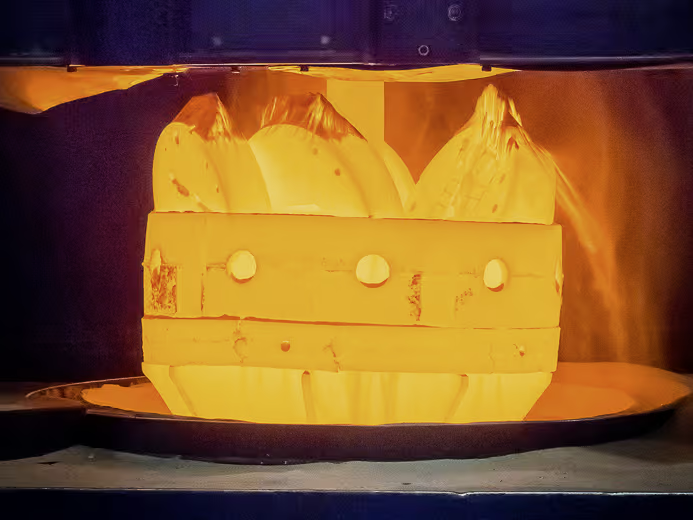
Our Michigan and Alabama locations heat treat and nitride in-house. Smaller dies run on an automated fluidized bed line, and larger dies go through conventional high-heat furnaces. Both routes cool the tooling in temperature-controlled chambers and finish with tempering. We also recommend nitriding for most dies, which is also offered in-house.
On-Site Technical Support
Our 17 technical specialists average 29 years each in aluminum extrusion, most of it earned in customers’ shops. They visit more than 100 customers a year for on-site troubleshooting and training.
- On-site troubleshooting and die repair
- Die repair training for your die shop staff
- Die shop management consulting
- Process audits
- Overall equipment efficiency (OEE) improvements
- Best-practice development for extrusion operations
- Pre-press install preparation and planning
- New press start-up support to resolve tooling and extrusion issues at launch
- Preventive maintenance support
- Product development and design for extrusion (DFE)
A die only runs as well as the process around it, so we’d rather be standing at your press. If something in your shop isn’t performing the way it should, ask us to come look at it.
Die Correction and Repair
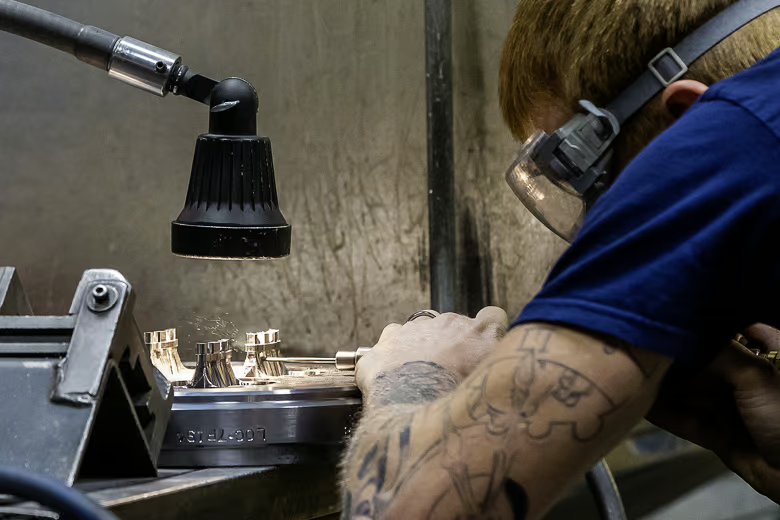
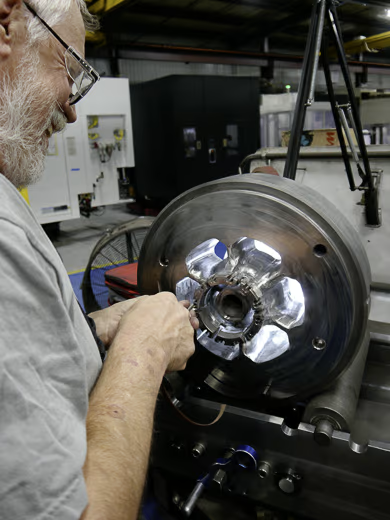
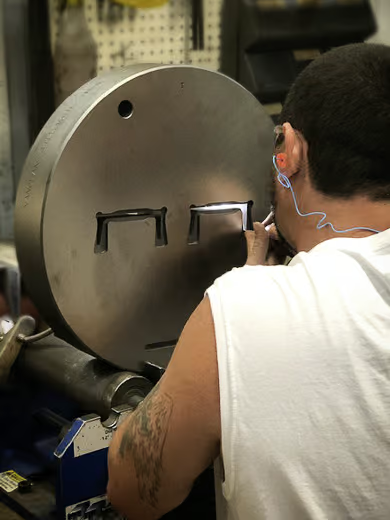
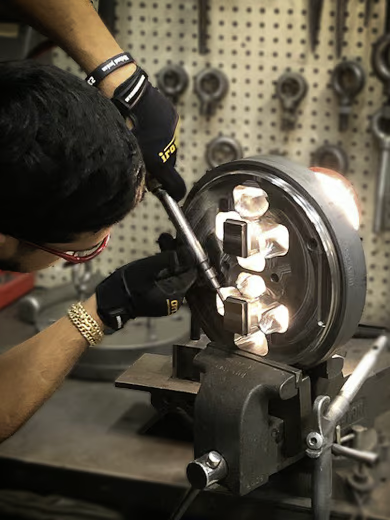
Members of our rework team average 21 years of die correction experience, and flow correction and die repair are their entire job. Your die goes to one of our four die correctors, who stays on it until it’s done. Every correction is documented, so the next one starts from a record instead of memory.
We’ll also tell you when a die isn’t worth repairing. One that’s been shortened past its limit or choked twice isn’t coming back. Sometimes the honest answer is a new die, and you’d rather hear that before you’ve spent two weeks finding out.
Aluminum Extrusion Die FAQ
Die FAQs
What type of die is best for my aluminum extrusion profile?
It depends on the profile, the strength the tooling needs, and how your billet feeds the die. Use the die selection table below as a starting point. If your profile doesn't fit any of these, send it to us anyway. Odds are we've seen something similar.

Why do aluminum extrusion dies fail on the first trial?
Most bad first trials come from unbalanced flow, which shows up as bow and twist in the profile. The next most common cause is deflection, where the die caves or dishes under billet pressure and the bearing loses its edge. We tune bearing length section by section and size the backer and bolster to your press tonnage to prevent both.
When is an extrusion die not worth repairing?
When it's been shortened past its limit or choked twice. At that point a new die is usually the better spend, and we'll tell you so before you've spent two weeks finding out.
What sizes of aluminum extrusion dies do you make?
Solid and hollow dies from 4" to 43" in diameter, each designed around your press, alloy, and profile.
Wherever You’re Located, We’re Here to Help
17 strategic locations in North America to meet the needs of our diverse customer base.
Insights
Get to know us. Get in touch today.
We have the resources to meet any part or production challenge. Let’s talk about what that means for you.
"*" indicates required fields