TTE, MSCED, TRD

Extrusion Die Shop Equipment Built by Die Shop People

Every machine on this page came out of a problem in one of our own die shops.

Why We Build Die Shop Equipment

We’ve built over 1.9 million dies over the past 50 years, so our die shops deal with the same headaches as yours do. Somebody swinging a sledge to knock a die out of a ring. A die corrector bent over for the third hour, hand-rotating a die every time they need eyes on a different bearing.

We got tired of it and built machines to fix it. They worked, so we started building them for other shops. Nobody sat in a conference room and decided to enter the die shop equipment market.

Single & Double-Ended Die Ejector

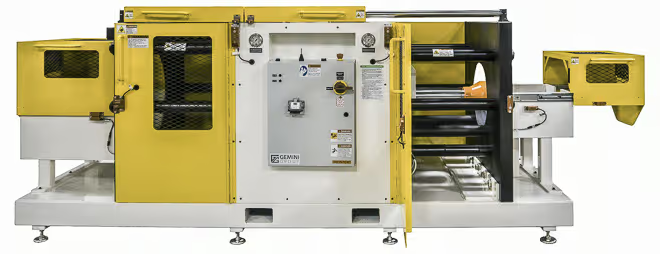
Every swing of the sledge is another chance that the die might not make it back into the press. Hydraulics do it in one controlled push.

Single-ended die ejector with machine guards and one loading zone.
Double-ended die ejector with machine guards and two loading zones.

Features

  • Fully customized and engineered to your specific die ring and die sizes
  • Hydraulic force aligned axially prevents damage to the parts and removes the die from the ring quickly
  • Machine guards and safety interlocks for operator safety
  • Optional die ring adapter accommodates multiple die ring sizes in one loading zone
  • Optional double-ended hydraulic cylinder accommodates two loading zones in one machine

Specifications

  • Dies from 8″ to 26″ in diameter
  • Die rings from 12″ to 30″ in diameter
  • 480 VAC

Die Vise, Turntable, and Polishing Station

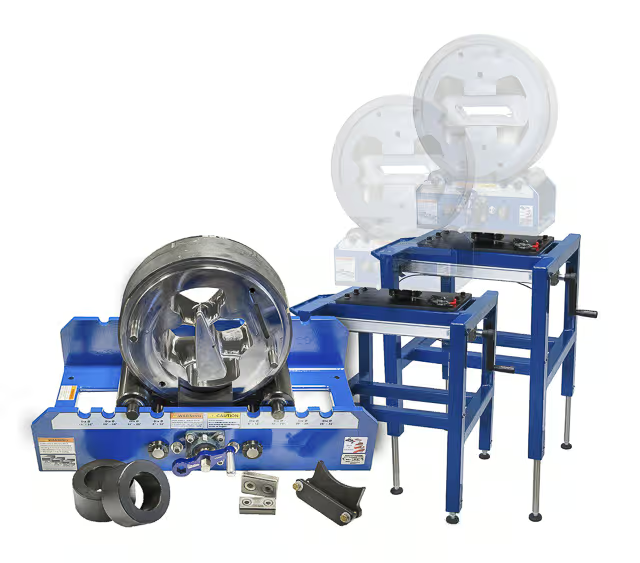
Effortless rotation of the die when you want it, secure clamping when you don’t. The optional turntable and polishing station provide 360° of swivel for optimal angle of die access and viewing and 9” of lift.

Die Vise holding an aluminum extrusion die, with optional turntable and polishing station.

Die Vise Features

  • Full-length rollers made of 3” diameter hardened steel, gliding on ball bearings for effortless 360° rotation
  • Clamping mechanism keeps radiused jaws parallel for maximum clamping area
  • Magnetic key fills the key slot to allow the die to rotate smoothly without interruption
  • Roller sleeves stabilize dies with steps or a tapered diameter
  • Jaw extension extends the height of the front or the back jaw when steps in the die OD keep the die faces out of reach of the standard jaws
  • Optional Turntable adds 360° of swivel with clamping at any angle and an easy toggle lever for locking in any position
  • Optional Polishing Station keeps the die vise stable and adds 9” of lift while minimizing the floor space required

Die Vise Specifications

MODELDIAMETERLENGTHWEIGHT CAPACITYPOLISHING STATION FOOTPRINTPOLISHING STATION POWER REQUIREMENTS
Model #20-66"–20"1"–7"1,000 lbs.30” W x 24” DHand crank or 120 VAC
Model #32-106"–32"1"–11"3,000 lbs.29” W x 26” D120 VAC

Die Ring Loader

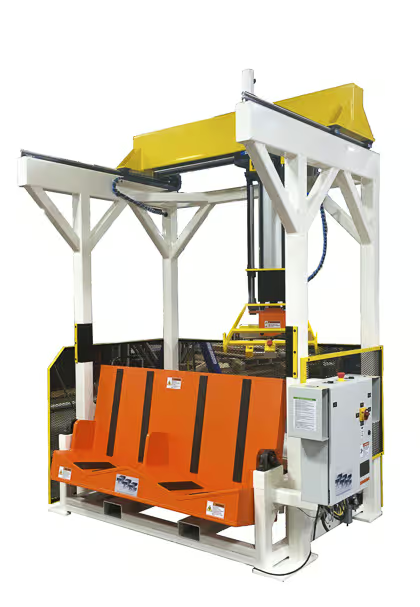
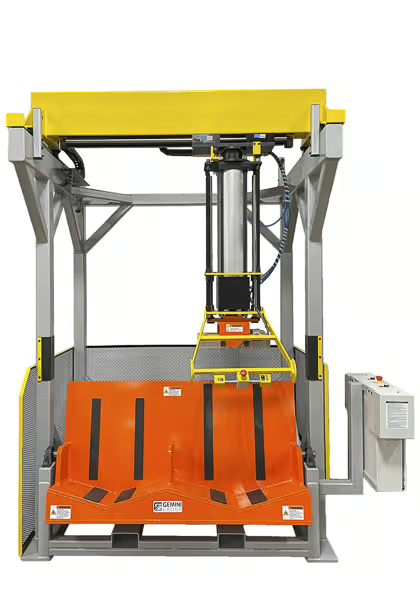
Align the die into the ring without jamming, hammering or finger pinching. A gantry holds the die assembly parallel to the ring so it slides in instead of getting driven in.

Isometric view of a die ring loader gantry holding a die assembly parallel to a die ring.
The front view of a die ring loader.

Features

  • Robust gantry holds the die assembly parallel to the die ring, so it slides in easily
  • Mechanical rod lock secures the load, even during system pressure loss
  • Up-ender table with abrasion-resistant wear plates for both the die and die ring
  • Two handed control system with control-reliable safety electrical components

Specifications

  • Dies from 8″ to 26″ in diameter
  • Die rings from 12″ to 30″ in diameter
  • Stack heights from 4″ to 15″
  • Power: 120V AC, 90 PSI shop air

Wedge Wheel Die Splitter

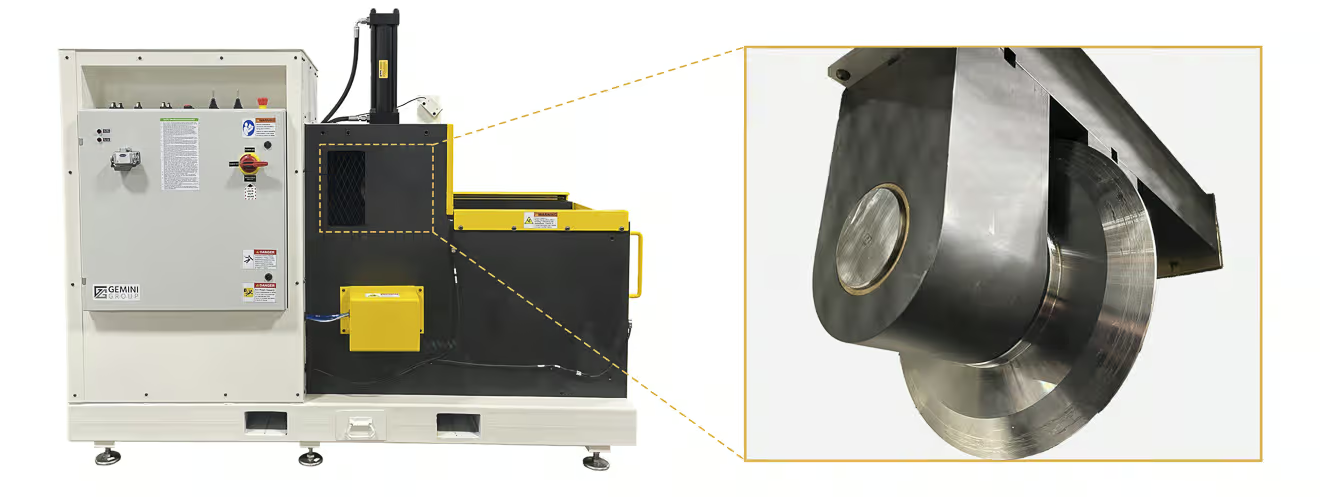
Hydraulic force drives a wedge wheel between the die halves while rotating the assembly at the same time, spreading it evenly across the split line.

Wedge wheel die splitter with light curtains at the work zone and a close-up of the wedge wheel.

Features

  • Minimal training required, consistent results regardless of operator experience
  • Even hydraulic rotation splits dies cleanly and prevents jamming
  • Light curtains stop the cycle if hands enter the work zone
  • Machine guards and safety interlocks prevent uncontrolled movement
  • Industrial-grade steel construction with electrical, hydraulic, and pneumatic systems throughout

Specifications

  • 480 VAC, 90 PSI shop air
  • Roughly 74” wide x 102” long

Die Upender

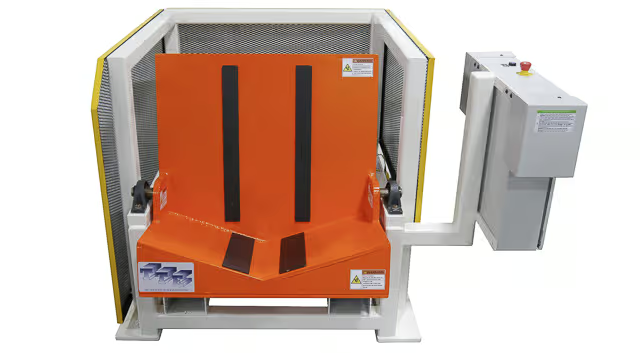
Flat for the bench, upright for the rack. The Upender safely lays a die down horizontally for maintenance and returns it to vertical for handling and storage.

Die upender tilting an aluminum extrusion die from vertical to horizontal.

Features

  • Made to suit the range of die sizes required, up to 30” diameter and 15” thick

Specifications

  • Requires 120 VAC, 90 PSI shop air

Die Vise Polishing Workbench

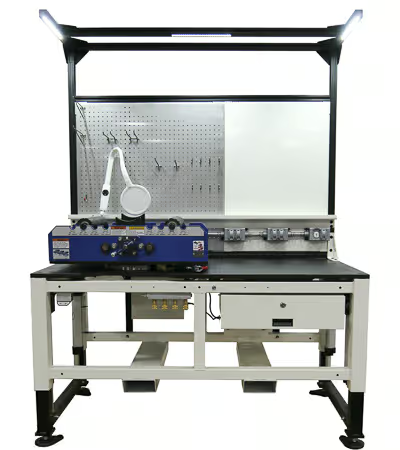
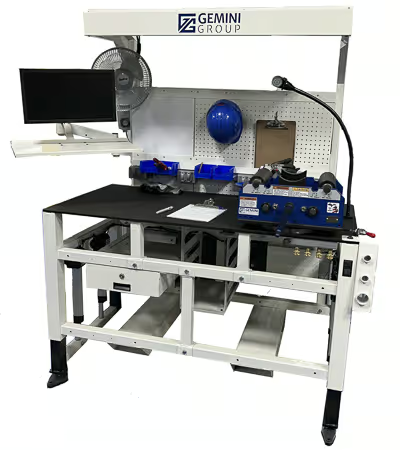
Built around the die corrector. Fully customizable. If your correctors work a certain way, we’ll build the bench that way.

Die vise polishing workbench with pegboard, LED work lamp, and air tool manifold.
Die vise polishing workbench with pegboard, air tool manifold, computer monitor, and personal fan.

Fully Customizable

  • Electric height adjustment up to 12″
  • Die vise with turntable
  • Adjustable LED work lamp, overhead lights
  • Pegboard, whiteboard, tool tray, lockable drawers
  • Air tool pneumatic manifold, tool holders
  • Overhead crane access, forklift pockets, bolt-down leveling pads

Specifications

  • 60” wide x 30” deep
  • Requires 120 VAC, 90 PSI shop air

Built for your shop, not for a catalog

We started by building these for ourselves. Now we’re building them for you. Ejectors are engineered to your specific ring and die sizes. Workbenches get built around how your correctors actually work.

Send us your size ranges and the operation that’s costing you the most time or causing the most safety concerns. We’ll come back with a recommendation and a quote.

Extrusion Die Shop FAQ

Die Shop FAQs
+
-

What die sizes do your die ejectors and die ring loaders handle?

Both handle dies from 8" to 26" in diameter and die rings from 12" to 30". Ejectors are engineered to your specific die and die ring sizes, and an optional die ring adapter fits multiple ring sizes in one loading zone.

+
-

What's the difference between a single- and double-ended die ejector?

A double-ended ejector adds a second hydraulic cylinder, so one machine has two loading zones. A single-ended ejector has one.

+
-

How does a wedge wheel die splitter separate a hollow die?

Hydraulic force drives a wedge wheel between the die halves while the assembly rotates, spreading the force evenly across the split line. It replaces the hammer-and-chisel method. Light curtains stop the cycle if hands enter the work zone.

+
-

Can your die shop equipment be customized?

Yes. Ejectors are engineered to your ring and die sizes, the upender is built to suit your die size range, and workbenches are built around how your correctors work.

+
-

What does a die vise do?

It holds a die for correction and polishing and lets the corrector rotate it by hand on 3" hardened steel rollers, instead of unclamping and re-clamping to see a different bearing. An optional turntable adds 360° of swivel, and an optional polishing station adds 9" of lift. Two models cover dies from 6" up to 20" or 32" in diameter.

Wherever You’re Located, We’re Here to Help

17 strategic locations in North America to meet the needs of our diverse customer base.

Get to know us. Get in touch today.

We have the resources to meet any part or production challenge. Let’s talk about what that means for you.

"*" indicates required fields

This field is for validation purposes and should be left unchanged.
Privacy Policy*